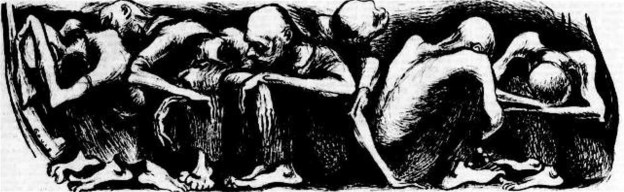
So much is known about the First Fleet that sailed to Botany Bay in 1788. But, less is known about the Second Fleet that followed it two-and-a-half-years later. My novel More than I ever had, tells the real life story of Theo Feutrill, a young Englishman who enlists in the New South Wales Corps in Birmingham, and is allocated a berth onboard the Neptune to sail to Sydney Cove as part of the Second Fleet. The Second Fleet became notorious for a reason, and when Theo steps onboard has no idea what’s ahead of him.
*
Why was there even a First Fleet?
When America said a polite ‘no thank you, not any more’ to the British, refusing to take further convicts on their shores (I think the American War of Independence had something to do with it) Britain ceased transportation of its convicts from 1776 to 1788. As a result, the prison population in Britain swelled. Rather than overhaul the crime and punishment system, authorities made the disastrous decision to house prisoners in ship hulks anchored in rivers and along sheltered coastlines. Disease was rampant, and conditions so bad, about a third of the prisoners died. Something had to be done.
In 1783, the idea of using Botany Bay as the new penal colony was proposed, and by May 1787 a fleet of ships, the First Fleet, led by Governor Arthur Phillip, sailed from Portsmouth and arrived in Botany Bay on 18 January 1788. This fleet of eleven ships contained six convict transports carrying 751 convicts—but unfortunately it did little to alleviate the over-crowded conditions on the prison hulks.
Once word was received from Governor Phillip that the First Fleet arrived and a colony was in the process of being established, the decision was made to send a Second Fleet.
While the First Fleet had a low mortality rate (5.4%), it was very expensive at £55,000. The ships contractor, William Richards, was a humanitarian and devout Christian, so he ensured the ships stopped often and were well supplied. To make savings for the Second Fleet, the government put the contract out to tender for three ships to transport prisoners to Sydney Cove. After the bidding process, the lowest bid was accepted (less than half of the cost of the First Fleet). William Richards was unsuccessful in his bid, instead the contract was awarded to Camden, Calvert & King—the largest company in London involved in the slave trade. What could go wrong?
Camden, Calvert & King were contracted to supply three ships (Scarborough, Suprize, and Neptune) and would receive £17.7.6 for each convict embarked. They also had the ability to sell any left-over provisions at Sydney Cove. Also, in the contract, the ship’s captains had full control over their ships, the doling out of provisions, and the treatment of the convicts. Perhaps in the hands of a different contractor, this contract could have worked to the benefit of all. But the masters on these ships were later described as: low-lifed and barbarous.
Through a dispute with the military onboard the Neptune, its master was replaced before the ship even left English waters, and in his stead was a man later described as a demented sadist and by Elizabeth Macarthur as a perfect sea-monster.
To make up the Second Fleet, the three Camden, Calvert & King prisoner transport ships were joined by Justinian (storeship), naval warship Guardian (primarily transporting stores but scuttled by an iceberg near South Africa) and Lady Juliana (contracted by William Richards, which transported exclusively female convicts).
A naval agent was appointed to monitor the captain and crew of contracted ships, but the one appointed to monitor Camden, Calvert & King’s ships did a questionable job. The master of the Guardian wrote later:
…if ever the navy make another contract like that of the last three ships they ought be shot, and as for their agent Mr Shapcote he behaved here just as foolishly as a man could well do.
Captain William Hill who travelled on Suprize with half of his men (the other half were on Neptune) wrote after his voyage:
The slave trade is merciful compared with what I have seen in this fleet.
So, we have ship masters of dubious character who have full control over provisions and how the convicts are treated. The contracting company is paid a set fee whether the convicts arrive alive or not, and there’s an incentive to not only withhold supplies from both convicts and passengers but to have less mouths to feed, as the captain and crew were set for financial gain by selling the left-over provisions when they arrived at the new colony.
Of the nearly 1,000 convicts onboard the Second Fleet, 261 male and 16 female convicts died on the voyage (plus four children) and another 150 convicts were dead within months of their arrival in the colony. In other words, if you measure survival within eight months of arrival in Sydney, the mortality rate of Second Fleet convicts was around 40 per cent. Compare the death rates by ship:
- Lady Juliana (5 women, 2 children)
- Suprize (42 men)
- Scarborough (68 men)
- Neptune (151 men, 11 women and 2 children)
The shocking mortality rate of the Second Fleet was nearly ten times that of the First Fleet voyage, and Theo Feutrill—the main protagonist in my book—is right in the thick of it as a passenger onboard the Neptune.
Following the outrage that occurred after the Second Fleet ships landed at Sydney Cove, the British government changed the way it contracted transport ships in the future. Amongst other things, contractors were paid for each convict that arrived in Sydney Cove alive.
*
More than I ever had More Than I Ever Had is a novel based on a true story by Rae Blair, and is available world-wide on Amazon Kindle in eBook and paperback formats.
 Rae Blair