Tag Archives: NSW Corps

Sharing advance chapters of More than I ever had

I think 2020 has taught us a lot about resilience and flexibility. Here, on the Northern Beaches of Sydney, our growth as humans continue to be challenged, as we face potential restrictions around Christmas celebrations this year. Already, our plans to be in Melbourne to celebrate with family have been dashed. I dislike the hackneyed word ‘pivot’, so instead I’ll use ‘pirouette’ to describe the fancy footwork we’ve all needed to learn to negotiate our forward planning.

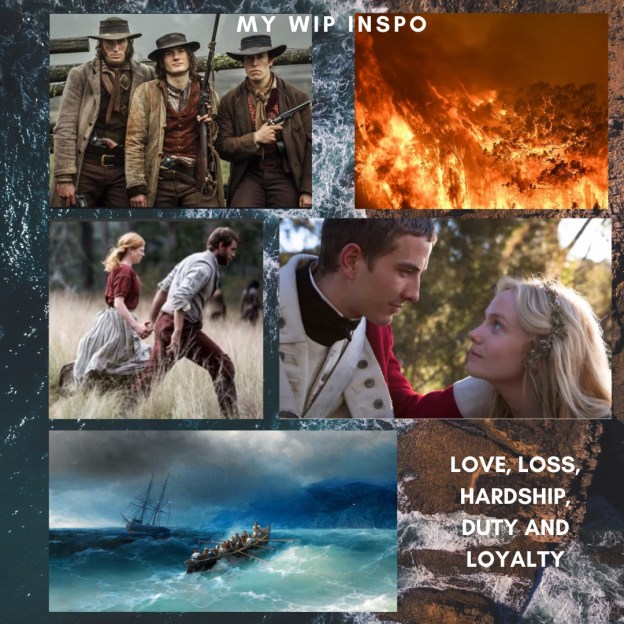
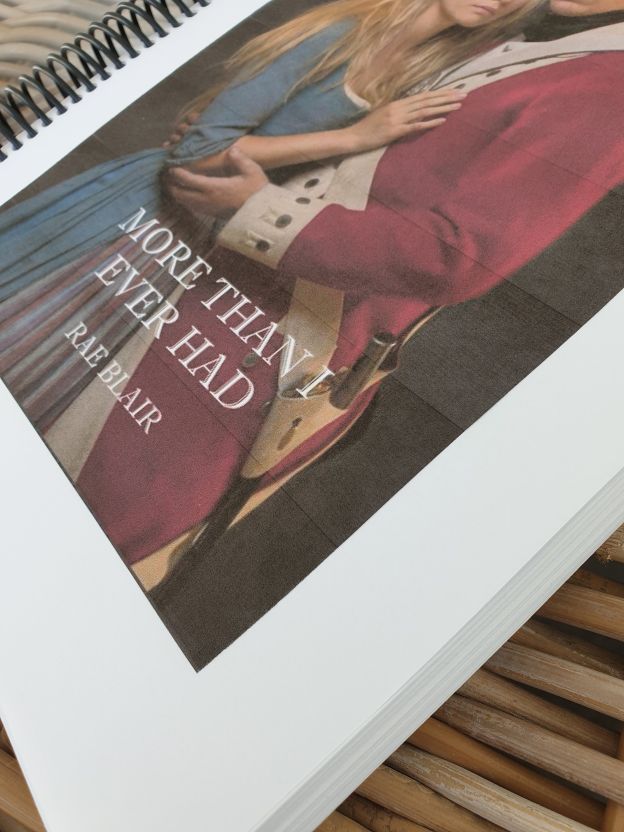
One good thing about being ‘locked down’ for a few days, is that it’s given me time to finish the editing of the early chapters of my draft manuscript, which is based on the life of ancestor Theophilus Feutrill. This historical fiction* is tentatively called More than I ever had, and tells the story of his journey to New South Wales as a soldier with the New South Wales Corps in 1790, and the next 30 years of his life.

Using feedback from writers’ groups and some early readers of my manuscript, I’ve been able to enrich the way the story is told. As so many of you, who are following my (ahem, irregular) blogs, have expressed a desire to read the manuscript, I’d like to now share the first three chapters with you. Hope you enjoy the writing, and feel free to share with me thoughts and comments after you’ve read the chapters.

My aim for the rest of the year is to complete the editing of the entire manuscript, and start 2021 seeking an agent or a publisher, so I can share Theo’s story with a wider audience.

Below is the ‘back cover’ blurb for the manuscript, and links you need to access the first two chapters. Happy reading, and hope you all have a safe and happy festive season.

*While the book is a work of fiction, it is based very closely on the facts of the life of Theophilus Feutrill, set within real events in Australian colonial history. Feutrill family historians will notice that Ann Short’s name has been changed to Ellen Short to avoid reader confusion.

Blurb for More than I ever had by Rae Blair

Faced with limited options in working class 18th century England, will leaving behind everything he ever knew give Theo the life and happiness he’s been long denied?

After a fire destroys 18-year-old Theophilus Feutrill’s employment prospects, and running from gambling debts, he enlists with the New South Wales Corps in Birmingham in 1789. He sails to the new penal colony on the worst ship in the worst fleet ever to reach Sydney Cove.

Theo contributes to the establishment of the colony, and falls in love with Irish convict, Ellen Short. Together, they deal with the struggles of a penal colony and fledgling country, facing famine and hardship. Theo is challenged with a devastating loss, before his duty takes him to establish northern Van Diemen’s Land.

Despite long periods of famine, his family grows, as does his reputation for the capture of bushrangers, which leads him to an encounter with the notorious Michael Howe.

Then Theo must make a choice between his son and his family, and the path he chooses forces him to confront his most heartbreaking loss of all.

This story is based on the real life of Theophilus Feutrill, a rank-and-file soldier with the British military, who came to New South Wales on the Second Fleet. As a soldier, his tale is unique and breathes new life into the colonial Australian story and encourages us to consider the true cost of loyalty, family and duty.

How to access the first three chapters

1) Download the Issuu App:

Android users:

Apple users:

https://apps.apple.com/app/apple-store/id914453825?mt=8

2) Then, click this link to access the first three chapters:

https://issuu.com/raeblairwriter/docs/blog_post__7_more_than_i_ever_had_chpt_1_and_2
Going beyond simple details

I’ve often wondered why some people—me for instance—become obsessed with tracing their family tree, and other people have zero interest. Take my brother, for example. I’ll unearth some tantalising snippet about our family tree and send out a group message to our family. Some members of my family will share my excitement, but for my brother, it won’t raise a skerrick of curiosity.

He says, “What difference does knowing all of that make to my life right now?”

I understand this position—unless I dig up a long lost wealthy relative who’s looking to leave their money to a family member.

But I view it a different way. I believe that who we are is a combination of nurture and nature.

Regarding ‘nurture’—in your Genealogical Tree are the names of every one of your ancestors who had a child, who had a child, etc. that led to you. It is not unreasonable to suggest that every decision made by these ancestors contributed to who you are today.

Regarding ‘nature’—it is less clear whether a particular ancestor in your Genealogical Tree has any biological contribution to you (or what the extent of their influence is), because of the random nature of DNA inheritance—though some geneticists suggest that there is a very high likelihood that you will have inherited some DNA from ancestors 9 x removed from you. That’s an enticing thought. At this stage, however, it is not possible to map your Genetic Tree to know for sure who is in it, but it is only a matter of time.

A few years ago, one of my husband’s aunts showed me a thick book with a red cover and gold embossed title. This tome chronicled the details of the life and offspring of Theophilus Fewtrell—my husband’s 4x great-grandfather, and by extension, my sons’ and grandson’s 5x and 6x great-grandfather. Whilst the research was impressive and the details extensive, there were many questions unanswered; for example, why did he make the decisions he made–which impacted on his family and his descendants’ lives? If I was to gain a sense of what the details of Theophilus Fewtrell’s life might mean to my family, I needed to understand him on a deeper level.

His story, as laid out in The Feutrill Saga book, and later confirmed by my research, hooked me. Here was an 18-year-old English boy, orphaned from age 3, who signs up to be a member of the New South Wales Corps in 1789 and sails to the other side of the world. Theo’s enlistment sees him serving in three continents and thrusts him amongst the struggles of a fledgling country, dealing with famine and other hardships. His is a story of love and loss and an impossible decision that leads to devastating consequences.

Theo’s life details are compelling, but a hypothesis was needed for his motivations and decisions, in the context of early Australia and the British military in the late 18th/early 19th centuries.

This was my inspiration to finally write a novel–to create a work of fiction based on facts and really get to the bottom of Theo’s story. In March 2019, I set down my first words.

Having worked in marketing, corporate communications and editing, gave me the confidence to start the manuscript, but it was soon apparent that corporate and creative writing are different disciplines. If the story was to be told well, I had to gain new skills.

The next 18 months saw my immersion in learning the creative writing discipline. Apart from a creative writing course and joining a Writers’ Guild run by a successful US novelist, I read blogs about structure, dialogue, character development and the business of publishing, and downloaded writers’ resources. The back catalogue of a writer’s podcast ran in my car. The local writer’s group accepted my membership, and I’m soon to start group coaching with a UK-based historical writer’s organisation.

To connect further with the writer and reader communities, I established my ‘writer’s’ website (www.raeblair.com) and online presence on Instagram (RaeJBlairWriter) and Twitter (@RaeJBlairWriter).

Running alongside all of this was the research, which formed the backbone of my hypotheses regarding Theo’s life decisions. Accessing journals of people who passed Theo in the street or who were passengers on the same ship over from England, and even letters written by people in Theo’s regiments, brought his world to life. There were academic theses about bushrangers and Australia’s security, and diaries of doctors who treated illnesses of the era, which added context, and these were just a few of the sources that contributed to my understanding.

And each day, the learning and the research fuelled the words that formed the story.

After 18 months, the novel has a beginning, a middle and an end, and is (from my viewpoint) a cohesive work of fiction. It has the working title of ‘More than I ever had’. The manuscript is now being read by a handful of people from diverse backgrounds who will provide me with critical feedback. This input will help take the novel to the next level, when it should be ready then to submit to potential publishers.

I’ll let you know how it progresses!