Tag Archives: Fewtrell

Additional scene: ‘More Than I Ever Had’ by Rae Blair

Have you finished More Than I Ever Had and want more? Or have yet to read the story? Here’s an additional scene that I couldn’t fit into the book. Enjoy!

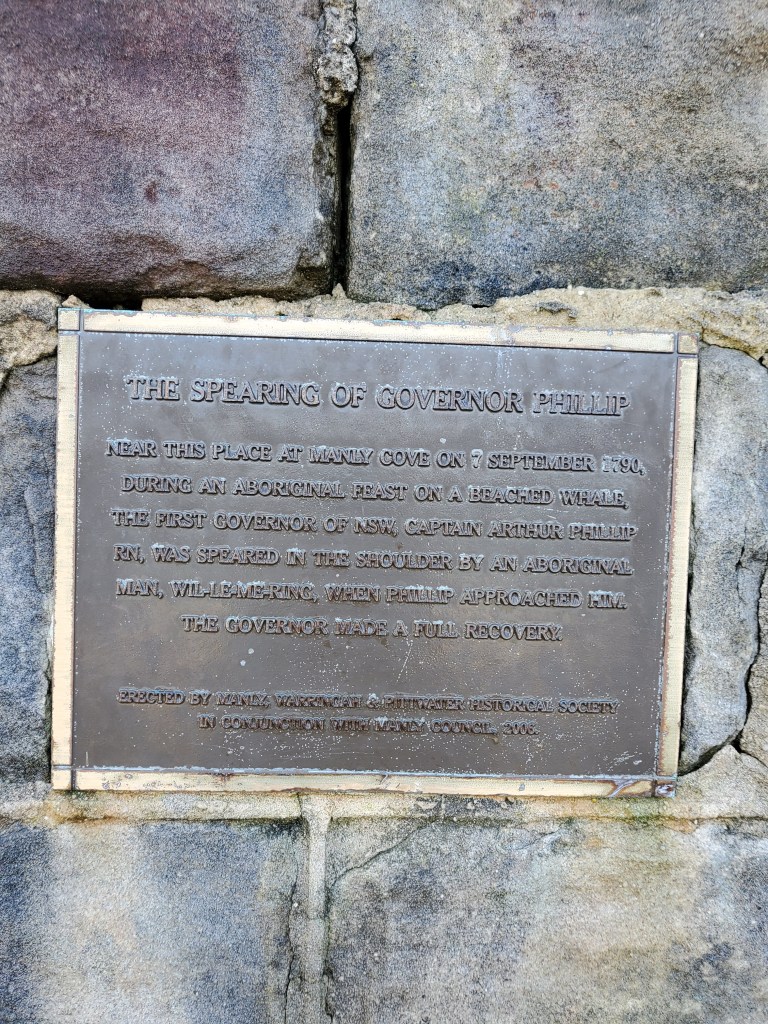
The spearing of Governor Phillip

Port Jackson, September 1790 (three months after landing)

The strangeness of this new land was becoming more familiar as the days passed. Duty devoured Theo’s daylight hours, and night time meant supper, socialising and sleeping. Since leaving the tent hospital, his body grew stronger, responding to long treks in the woodlands to supervise land clearing and planting, breathing fresh, cool air under endlessly high skies. The cold months—mild in comparison to home—seemed to be passing.

The sun had not long risen when Theo made his way to Captain William Hill’s tent. He’d received a summons last night, which was unusual. Normally, Theo’d report to the registrar for his daily duty, or his sergeant, who’d give specific orders. He wondered why the captain wanted to see him?

Theo paused outside the open flap of the captain’s tent. Captain Hill sat behind his desk, finishing signing a document before glancing up at Theo. A mug of steaming tea sat within hand’s reach. The captain noticed Theo and was about to speak when another private appeared by Theo’s side—a short, dark-haired soldier with narrow-set eyes and aged in his late twenties—someone Theo had not yet met.

“Franks, Feutrill, please come in,” Hill said.

The captain folded his hands over the paperwork as the privates entered the tent and assembled before him. “Governor Phillip is heading to Manly Cove this morning to meet with the native called Bennelong and some of his tribe. It is crucial this meeting go well. I’ve selected you both to assist the governor.” The captain sipped his tea. “See the storemaster now, as the governor will take some supplies with him. Get these onto the boat. Also ask the convict overseer to select six men to row the governor and his party—you’ll both be responsible for them. The governor wants to leave in two hours. Is anything unclear?”

“No sir,” Theo responded. Franks shook his head.

“Good, you are dismissed.”

After they’d seen the convict overseer, they headed to the store house. There, Theo signed with his mark for several hatchets, some bread, salt pork and wine. Franks swept up the food and left the heavier bundle for Theo to carry. On their way to the boat, Franks broke off a piece of bread and put it in his pocket.

“Is there a problem?” Franks said, when Theo threw him a look. “You gotta look out for yourself here, mate.”

Theo ground his teeth and adjusted the weight of the supplies he was carrying. This wasn’t a good start. “Let’s just make sure we do our job.” Theo strode ahead. This was the first opportunity Captain Hill had given Theo, and he wanted to make sure the captain would not be disappointed.

Down at the wharf, Theo stepped into the rowboat, balancing himself to receive the supplies from Franks, before he also boarded. Six convicts were already seated at their oars, chatting amongst themselves and ignoring Theo and Franks. The boat’s coxswain sat at the stern, picking at some dirt under his fingernail.

As Theo stowed the supplies, two officers arrived and stepped onto the boat; the more senior-ranked, and older of the two, had his dark hair pulled back in a pony tail—his good looks marred by a pock-marked skin. The other was a young officer with brown wavy hair. Governor Phillip strode up with a third officer, who appeared to be in his late-thirties with a long thin face and a head topped with salt-and-pepper curly hair. The officers exchanged pleasantries amongst themselves and found their seats.

“Are the supplies I requested on board?” The governor directed his question to the privates.

“Yes sir,” Franks replied.

“Let’s get underway, shall we?”

At the coxswain’s instructions, the men found their oars, then dug them into the water, negotiating the boat away from the wharf.

As the rowboat pulled away, the governor took a flask from his pocket and took a drink. Recapping it, he said, “Captain Lieutenant Tench, perhaps you can give the others some background to our mission today.”

The officer with the pock-marked face turned so all the officers could hear him. “As I told Governor Phillip, Captain Nepean found Bennelong and Colebee at Manly Cove two days ago with a sizeable group of natives, hacking a dead whale to pieces for food.” He paused to settle in a more stable position as the boat lurched. “The natives asked for hatchets, but Nepean’s group could only give them a few things of little use. Before they left, Bennelong gave Nepean three or four great hunks of whale as a gift for the governor.”

“You all know of my desire to improve relations with the natives here,” the governor said. “Bennelong’s made the first move. This is an opportunity for us to show good will and further cement our relationship.”

“He appears to be in friendly spirits,” the officer with brown curly hair said. “I was with Captain Nepean’s group. Bennelong was larking about and kissed me!” Theo stifled a laugh. The man looked like he had just sucked a lemon.

“That must have been a surprise, Lieutenant Waterhouse,” the governor said, smirking. “These people can be hard to read. So I urge caution. We will need to assess the mood with care when we arrive, and I ask that you follow my lead.”

As they pulled further away from the port, the calmness of the water changed and the rowers had to pull harder to negotiate the swells of the harbour. From the journey’s outset, the comfort of land remained visible. The stunning coastline was rugged with tall cliffs and sandstone rocks, with the occasional white sandy beach fringed with bushland. Now, they had large tracts of water surrounding them on all sides. The crystal clear water turned now to a bruised purple, as the waves picked up.

“Sir, we are just coming past the heads, so I suggest you all hold on tighter,” said the officer with the curly salt-and-pepper hair. “The harbour can be rough between the south and north headlands.”

“Thank you, Collins,” the governor said.

Theo clamped his hat more firmly on his head and adjusted his hold on the musket. He braced his feet the best he could against the hull and gripped his seat with his free hand. His stomach rolled as the rowboat crested each wave. Briny air filled his nostrils as spray from the sea splashed his face with salt.

The group remained silent until they were past the heads, where the water calmed again as they continued northward toward Manly Cove. The rowers were tiring. Soon, a large expanse of sand appeared, punctuated in the middle with a black whale carcass, half submerged in the water. The shape grew larger as the boat approached. Surrounding the carcass and spread along the beach were at least one hundred natives.

“Sir, the wind is coming from the south-east, so I suggest that we put the boat in to the right of the carcass,” Lieutenant Waterhouse said.

“Coxswain?” the governor looked at the man managing the boat, who acknowledged the request with a nod.

“Privates, you and the rowers remain with the boat,” the governor said to Theo and Franks, as the boat slid up onto the sand, jolting everyone forward when the hull dug in.

The governor jumped over the side and strode off. His officers gathered the supplies and scrambled to follow. Groaning with relief, the oarsmen sat back in their seats and rubbed at blisters that were forming—their shirts glued to their backs with sweat.

As the governor and the officers approached the group, a chill ran up Theo’s spine as all of the natives stopped what they were doing to watch the white men approach.

“I’ve got to take a piss,” John Franks announced as he prepared to get off the boat.

“Franks!” Theo said, alarmed. “We were told to stay put.” It wasn’t ideal to be left alone to manage seven convicts, and what would happen if things turned ugly on the beach? If Franks left, Theo’s musket was their only means of defence.

“I won’t be a moment,” Franks said. He slipped over the side of the boat furthest from those on the beach and disappeared into the bush.

Things were happening now on the beach. The natives split into two groups and moved to the left and right of Phillip and his men, as if to surround them—they were vastly outnumbered. The sight of the dark-skinned men, many holding sticks or spears, made Theo’s palms sweat. How vulnerable we are!

Governor Phillip held his hand up, signalling to his party. He and the three officers stopped and retreated a few steps. This seemed to appease the natives as they reassembled back into a single group.

Theo let out a quiet breath. For those in the boat, their focus remained on the scene playing out on the beach. But Theo kept glancing into the bush wondering what was taking Franks so long? Whilst Theo was distracted, one of the older oarsmen took this moment as his opportunity to flee. Being farthest from Theo, he could not grab hold of the fleeing man before the he jumped over the boat’s edge and darted into the bush. Christ!

Theo raised his musket and aimed, but in a split second decided not to shoot the escaping convict, for fear of startling the natives. Where’s bloody Franks?!

Watching the back of the escaping convict, frustration burned in Theo’s chest. He had to stay in the boat to secure the remaining convicts.

“Anyone else have the same thought, I will not hesitate to shoot you” he said, lifting his musket. His scalp prickled. It was madness that a convict would choose to escape, and Theo didn’t like his survival chances, but still—it happened, and on Theo’s watch.

On the beach, the governor beckoned for Bennelong to come forward, and he did so holding a long wooden-barbed spear. The governor motioned to swap the spear for the supplies the officers were holding. Bennelong walked to the bush edge and put the spear down, replacing it for a stick, which he then presented to the governor. The native Colebee also came forward, and he helped Bennelong take the supplies from the officers.

Bennelong and Colebee appeared to chat in a friendly manner with the governor, who had stepped apart from the officers. Bennelong appeared to introduce different natives to the governor. The natives stood back in separate groups, many watchful. It seemed to be going well.

Theo jumped as Franks reappeared and climbed back into the boat with a smug grin, which faded when he saw Theo’s face and the missing oarsman.

“What happened?” he said.

“This is on you,” Theo said.

Bennelong pointed out a native to the governor’s right. Governor Phillip held out both his hands and called to him, then stepped towards the native, with David Collins close behind. Theo didn’t like the look of what was happening. The closer the governor approached, the more agitated the native appeared.

Collins said something to the governor. The governor reached under his jacket and withdrew a dagger from the sheath at his side and dropped it onto the sand.

But this had the opposite of the intended effect on the native man, who stepped back, eyes wide. In a swift motion, the native kicked Bennelong’s spear out from the grass. Both the governor and Collins stopped dead in their tracks—the governor held up his hands, and Theo’s breath caught in his throat.

Appealing to the man, the governor spoke a few words in a native language which floated back to the boat. In response, the native stepped one foot back and released his spear with such force that it pierced the governor’s right shoulder. The governor staggered back, Collins reaching to catch him.

Everyone on the boat inhaled with surprise. Theo’s mind whirled as his body went cold—they’d attacked the governor, what now?

“Get ready,” he instructed the rowers, who all scrambled for their oars.

As the governor collapsed to his knees, the native who threw the spear dashed into the bush. Bennelong and Colebee also fled, along with most others from the beach. As Collins rushed to the governor’s aid, several natives launched spears in the general confusion that followed, with none finding their mark. Tench and Waterhouse raced forward and helped Collins drag the wounded governor to safety, taking care to avoid the wooden barb of the spear piercing through his back. With every step, the governor screamed as the pole end of the spear hit the ground. Tench tried to steady it. Once out of reach of the natives’ spears, they laid the governor on his side. Captain Lieutenant Tench yelled at Theo and Franks to cover them. By this stage, Theo and Franks had jumped out of the boat, their muskets aimed just above the heads of the natives. Theo got a shot off. Franks’ musket jammed. The remaining natives scattered, emptying the beach save for the whale carcass, the wounded governor and the officers trying to save him.

Lieutenant Waterhouse knelt by the governor and attempted to break the spear’s pole, so they could move the governor into the boat. With each attempt the governor moaned, and it took several tries with much effort from Waterhouse before it snapped. Blood soaked the governor’s shirt, front and back, yet he remained conscious. They hoisted the white-faced governor back to his feet and loaded him onto the boat, laying him down. Theo and Franks pushed the boat off the sand, then jumped in once it floated.

Lieutenant Waterhouse noticed the missing oarsman. “Where is he?!”

Theo swallowed. “He escaped, sir.” Theo and Franks found their seats. The five oarsmen got ready to row.

“How?” Fury tinged Waterhouse’s words.

“With only one of us to guard the convicts, I couldn’t leave the boat to chase him, sir,” Theo said.

“And where were you, private?” Waterhouse rounded on Franks.

“I, er, well, I needed to relieve myself, sir. He had scarpered before I came back.”

“This is a shambles,” Collins said, taking off his jacket and folding it under the governor’s head. “We’ll be taking this up with your captain.”

Theo cringed inside. The one time Captain Hill trusted him with an important mission, not only was the governor injured, but a prisoner escaped!

“You private,” Waterhouse indicated to Franks, “take the sixth position on the oars. Let’s get back to Sydney Cove as quick as we can.”

Franks removed his jacket whilst giving Theo a thunderous look. He sat in the vacant seat and bent his back to pick up the oars.

The five mile trip back seemed twice as long as the trip over. The wind had picked up and the rowers struggled in the choppy water. Theo was anxious to be back at the wharf, for the governor to get medical aid. He glanced at the ashen face of the governor, who had not moved since the officers laid him down. Could he die? What would Captain Hill think of all this?

Back at Port Jackson, they lifted the governor out of the boat and the officers carried him to his home for treatment. Theo climbed out the boat and Franks followed, bumping his shoulder against Theo as he brushed past. “You dog, Feutrill,” he said. “I won’t forget this.”

*

Theo and Franks reported immediately to Captain Hill, whose face was pulled down as he received their report. He expressed his “abject dissatisfaction” with the acquittal of their duties, and “deep dismay” at the turn of events on the beach. He strode out to see to the governor’s health and learn first-hand what actually happened, leaving Theo and Franks behind in his tent, like naughty children.

News of the attack on the governor spread around the settlement, and the military issued instructions for all soldiers to be on high alert in the event of reprisals—from either the settlers or the natives—though the governor made it clear he did not wish for any retaliation.

Over the following week, Bennelong and Colebee, who were previously regular visitors—were not seen at the settlement. Ten days following the incident, during which the governor continued to heal, Theo was submitting his daily report when Llewellyn caught up with him in the soldier’s mess tent.

“Feutrill, you saw the governor speared, didn’t you?”

In the days since it happened, it was all anyone would talk about. What had Theo seen? What was his role? But for Theo, it was something he wanted to forget. He didn’t know at the time whether they’d all be attacked or how close he was to losing his life? Whether he’d have to shoot someone to save themselves? He just wanted it behind him now. The governor was on the mend, and the escaped convict eventually returned to the settlement, near starvation.

Llewellyn didn’t wait for Theo to answer. “Did you hear Bennelong and Colebee are back? Met with the governor today?”

Theo’s ears pricked up. “How’d that go?”

“From what I’ve heard, it was a man called Willemering who speared him. But the governor has accepted that he did so out of impulse and self-preservation. He wants no further animosity—from either side. I think they’ve agreed to a truce of sorts.”

Theo huffed out a breath. “I think that’s good news.”

Llewellyn saw another person he wanted to share the gossip with, so clapped Theo on the shoulder and raced to catch up with him.

Impulse and self-preservation? As Theo headed back to his tent, he mulled that over. Located near the settlement is a clearing where the Cammeraygal tribe gathered for their rituals, and they welcomed the settlers to watch proceedings. He recalled a gathering from last week where a Cammeraygal called Carradah was the centre of a ritual—he’d apparently stabbed another member of the tribe, but not killed him. Theo learned that the tribe demanded Carradah receive payback before his crime could be forgiven.

Over two brutal nights, Theo and others gathered to watch the ritual, as Carradah used his bark shield to defend himself from the spears being thrown. Eventually one found its mark, pinning his lower arm to his side. Bright crimson blood oozed from the wound. Despite the injury, Carradah continued to avoid the remaining spears until the tribesmen exhausted their supply.

Theo thought it would be over then, but men, women and children of the tribe rushed forward to pick up the broken bits of the spears to piece them together, before resuming the attack. Carradah found a second wind and was quick on his feet as his shield took on further spears. Then, a spear pierced Carradah’s thigh, and the man sank to his knees. A tribal elder stepped forward and made an announcement. The attack stopped and the natives retreated into the bush, leaving just the European settlers to watch as Carradah’s injuries were attended to by a young native woman. Once he was patched up, they left the clearing.

Theo saw that the spear used on the governor was Bennelong’s. He wondered then, could the spearing have been a ritual punishment for the governor capturing Bennelong and Colebee when the First Fleet arrived? From the outside, Bennelong and Colebee appeared to get along with the governor since they were no long captives, but did they need to give the governor payback, so that they could forgive him? Did they lure the governor to Manly Cove for that very purpose? Surely, the governor must be contemplating the same thing. Whatever it was, Theo hoped it was now over.

##
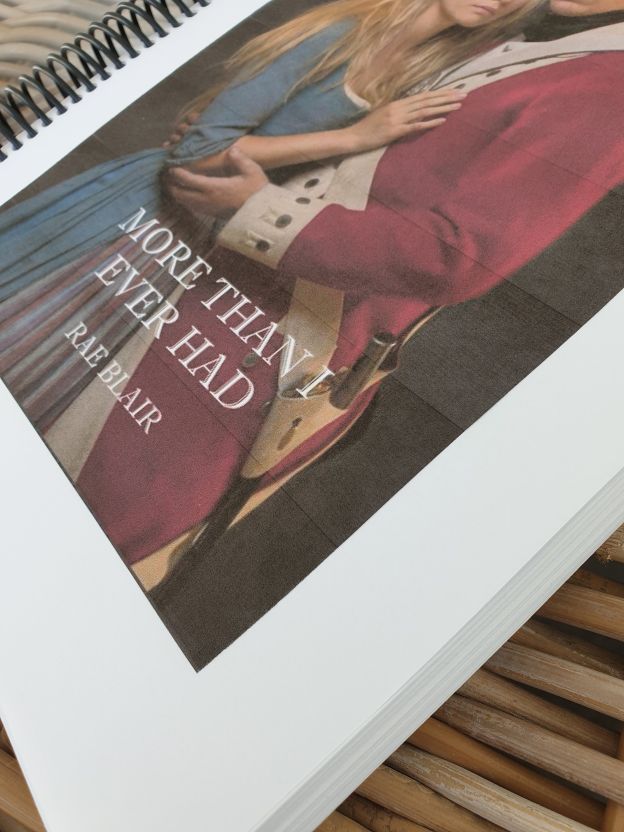
More Than I Ever Had is available in paperback or eBook format from Amazon (world-wide). Link to the book on the Australian site here.

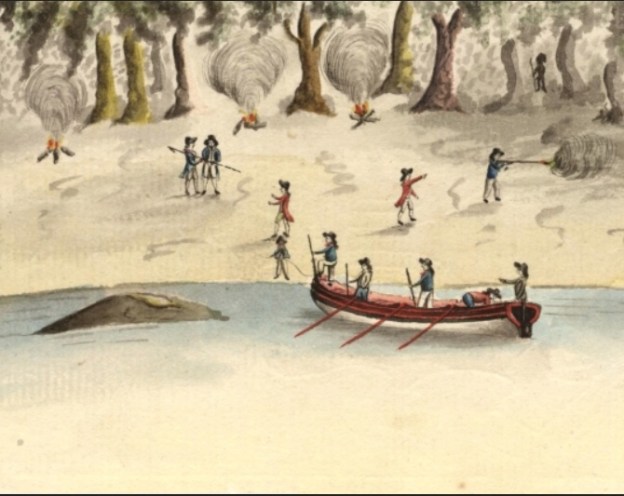
Main image:

From the collection of the Natural History Museum (UK). By a Port Jackson painter, ca. 1790.

The inscription reads:

‘The governor making the best of his way to the boat after being wounded with the spear sticking in his shoulder’


The Baughan Affair

In 1796, Theophilus Feutrill’s name appeared on an arrest warrant issued by the Governor of New South Wales. If found guilty, Theo could be executed. But will it be Theo or the Governor whose life is on the line?

**

What you need to know is that civil and military tensions in the new penal colony of New South Wales were high from the outset—right from the first days of Europeans arriving in 1788.

In those days, the key players were Governor Arthur Phillip on the ‘civil’ side—charged with responsibility for the new settlement—and Major Robert Ross on the ‘military’ side—who was appointed lieutenant-governor of New South Wales in 1786. Phillip and Ross arrived in Sydney Cove together in January 1788 on the First Fleet.

With Phillip making all the decisions about the location of settlement and the rules governing the new colony, Major Ross was responsible for the New South Marines under his command.

Think for a moment. You are located in unfamiliar bushland, in a far-away foreign country, with no buildings or crops, and only the livestock and supplies brought with you on the ship to sustain you. Someone else is responsible for deciding where you’ll live. How things will run. Another supply ship is not due for maybe over a year away. It would take enormous confidence in that person to blindly submit to all their decisions. Your life is certainly in their hands. Major Robert Ross with his military experience was not that person to put his life in another’s hands. Almost immediately, Phillip and Ross clashed. Historians note Ross’s long and detailed criticisms of Phillip’s decisions and his government. Amongst other grievances, such as settlement location, Ross opposed Phillip’s schemes for organizing the convicts and refused to allow the military officers to help supervise the prisoners.

Ross began to actively work against Governor Phillip, making his administration task more difficult. Phillip endured this for over two years, but in March 1790, he saw an opportunity to remove the key source of friction from Sydney Cove, and sent Ross to take charge of Norfolk Island. Whilst this finally gave Phillip some breathing space, the British government had already decided to recall the fractious Major Ross and his New South Wales Marines, and a replacement military presence was already on its way—the New South Wales Corps—which included Private Theophilus Feutrill as part of the Second Fleet.

A double-edged sword

Governor Phillip must have welcomed Major Ross’s replacement, Major Francis Grose, and the New South Wales Corps with a high level of optimism. Certainly, Grose was reported to have been unassertive and easy-going, and appeared to give Phillip little cause for complaint.

However, Governor Phillip had to return to Britain in December 1792 to receive medical treatment and never saw Sydney Cove again. In his absence, Major Grose assumed control of New South Wales. The military was now in charge of the new colony.

Upon assuming command, Grose, amongst other things, replaced civil magistrates with military officers and appointed Lieutenant John Macarthur inspector of public works. The steps he took appear designed to reduce his own burdens and align his supporters more closely with the administration of the settlement. Some historians have suggested that at this time Macarthur became the de facto ruler of New South Wales, such was his influence with the governor.

Under Grose, the lot of the military improved, with increased rations, improved housing and land grants, with convicts paid by the government to work ‘private’ land. Grose encouraged officer farmer pursuits, contravening orders from Britain that the land holders had to pay for convicts working their land.

Soon, many of the civil and military staff directed more of their efforts to improving their personal gains at the expense of their duties. Trade, especially in liquor which became like a currency, became substantial, and Grose’s policies enabled the military to secure a hold over the colony, to exploit it for their own interests.

But then, Grose returned to England in December 1794. It was at a time when New South Wales was still importing essential requirements, but the colony was more sustainable and the spectre of famine no longer hung over the settlement. With Grose’s policies improving the quality of the settlement, Captain William Paterson—who assumed the role of administrator—maintained the status quo until Governor John Hunter arrived (he assumed office in September 1795). By this time, policies entrenched from military rule, which were impacting on the Treasury’s purse back in London, were going to be difficult to wind back.

Governor Hunter had a job ahead of him if he was to bring the military to heel—and to protect settlers from exorbitant prices charged by officers for goods. Hunter didn’t have a loyal public service. He didn’t have an obedient military. Orders arriving from London were erratic and some could take over a year to receive and implement.

Hunter also had other forces working against him. In the absence of a free press, Hunter’s superior, the Duke of Portland (one of three secretaries of state in London), relied not only on Hunter’s reports, but correspondence from residents in the colony, such as those from Lieutenant John Macarthur, who had his own agenda. Macarthur, as inspector of public works, and as a recipient of significant land grants, was in a position of influence. While Macarthur had the governor’s ear, the supply of convicts to officer farmers on the government’s purse continued, as Hunter became convinced that government farming was wasteful and inefficient. But Hunter soon realised Macarthur’s ambitions and later told the Duke of Portland that ‘nothing short of the full power of the Governor’ would satisfy the man.

Despite steps taken by Governor Hunter and with the constant communication from John Macarthur, the Duke of Portland continued to be unimpressed by his performance, but it is Hunter’s handling of the ‘Baughan affair’ which sets the tone for the rest of his career—and Theophilus Feutrill is right in the thick of this.

A “most violent and outrageous” conduct

It all started from a long-running feud between two ex-convicts: John Baughan, carpenter by trade and millwright, and an un-named man, carpenter-turned soldier, who were both being transported to America on the Mercury when it was overtaken by a convict mutiny. They were both re-captured, and sent to Australia onboard the Friendship as part of the First Fleet. Baughan was described as ‘an ingenious man’ who built two fully functioning mills, which helped feed the colony. He was rewarded through a grant of a small lease near Dawes Point, and given the role of Foreman of carpenters. He was also described as being ‘sullen and vindictive.’

On 4 February 1796, the carpenter-turned-soldier in the feud with Baughan was on sentinel duty at a storehouse near where Baughan was working. The soldier set down his arms against the wall of the store and left his post, to speak with a man he knew outside of the building in which Baughan was working. Much abuse was said about Baughan, intentionally loud enough for him to hear. Baughan slipped away unseen to where the soldier was meant to be on duty, and found his abandoned musket. Baughan took this to the guard-house, delivering it to the sergeant of the guard. The soldier was arrested and relieved of duty as a result.

Baughan’s action caused an outrage with the military, and it was determined to exact its revenge. The next day, a large group of military members stormed John Baughan’s neat, well tendered cottage and the mob broke gates, doors, windows, entered his house, chopped the corner posts off it, broke his bedsteads, bedding, chairs, window frames, drawers, chests…demolished everything. Members grabbed Baughan and threw him down with his face to the ground, whilst one held an axe over his neck and swore if he offered to stir he would chop the head from his body. At the end of the rampage, the soldiers went off cheering, as if something ‘meritorious had been effected’ and marched in a body cross the parade before their commanding officer’s house.

While David Collins noted in his diary that mostly ex-convicts-turned-soldiers were involved in the mob, Governor Hunter wrote to the Duke of Portland that it was ‘all off-duty members’. Hunter considered from the military’s actions that they were in a state of mutiny, and issued in Public Orders the paper no. 2. In the paper, the governor hopes to have found men amongst them who would have pride enough to have stood forward and pointed out the ringleaders of so mutinous conduct, for in no other light can it be considered than that of mutiny when the military assemble in such numbers unknown to their officers and by their bringing forward the ringleaders or advisers of this disgraceful conduct, in order that the stigma may be wiped away by such worthless characters being brought to trial for this shameful conduct.

As a smart man, John Baughan just wanted the affair over, and refused to identify the perpetrators. His wife, who witnessed the destruction, was fearful for her husband’s life should he pursue it.

Perhaps if it ended there…

As magistrate, Dr William Balmain visited the Baughans when he heard of the rampage. He threatened John Baughan with ‘obstruction of justice’ charges if he didn’t pursue the matter, and offered protection to him should he give evidence. After some days, four names were eventually given up. When the governor issued the arrest warrants, the military was further enraged at Balmain’s shamefully malevolent interference in the affairs of the Corps. One of the warrants was for the arrest of Theophilus Feutrill.

As the military were responsible for the enacting of arrest warrants, Lieutenant John Macarthur approached the governor and stalled the process. Thus began a test of strength between the civil and military authorities. As Theophilus fretted over his fate—he was facing potential execution if found guilty—a series of letters was exchanged between Judge Advocate Balmain (representing the civil authority) and Lieutenant John Macarthur (representing the military). Tempers frayed and insults given to the point that Balmain told Macarthur he was a base rascal and an atrocious liar and villain. Balmain then challenged Macarthur to a duel.

Who would prevail, and will John Baughan persist with the charges? What of Theo’s fate? What does Governor Hunter do that has the Duke of Portland reaching for his quill to issue new orders?

**

Learn the outcome of the 1796 arm wrestle between the civil and military authorities. More Than I Ever Had is a novel based on a true story by Rae Blair, and is available world-wide on Amazon Kindle in eBook and paperback formats.

Image: Joseph Millson as Major Robert Ross in Banished TV-series

Sharing advance chapters of More than I ever had

I think 2020 has taught us a lot about resilience and flexibility. Here, on the Northern Beaches of Sydney, our growth as humans continue to be challenged, as we face potential restrictions around Christmas celebrations this year. Already, our plans to be in Melbourne to celebrate with family have been dashed. I dislike the hackneyed word ‘pivot’, so instead I’ll use ‘pirouette’ to describe the fancy footwork we’ve all needed to learn to negotiate our forward planning.

One good thing about being ‘locked down’ for a few days, is that it’s given me time to finish the editing of the early chapters of my draft manuscript, which is based on the life of ancestor Theophilus Feutrill. This historical fiction* is tentatively called More than I ever had, and tells the story of his journey to New South Wales as a soldier with the New South Wales Corps in 1790, and the next 30 years of his life.

Using feedback from writers’ groups and some early readers of my manuscript, I’ve been able to enrich the way the story is told. As so many of you, who are following my (ahem, irregular) blogs, have expressed a desire to read the manuscript, I’d like to now share the first three chapters with you. Hope you enjoy the writing, and feel free to share with me thoughts and comments after you’ve read the chapters.

My aim for the rest of the year is to complete the editing of the entire manuscript, and start 2021 seeking an agent or a publisher, so I can share Theo’s story with a wider audience.

Below is the ‘back cover’ blurb for the manuscript, and links you need to access the first two chapters. Happy reading, and hope you all have a safe and happy festive season.

*While the book is a work of fiction, it is based very closely on the facts of the life of Theophilus Feutrill, set within real events in Australian colonial history. Feutrill family historians will notice that Ann Short’s name has been changed to Ellen Short to avoid reader confusion.

Blurb for More than I ever had by Rae Blair

Faced with limited options in working class 18th century England, will leaving behind everything he ever knew give Theo the life and happiness he’s been long denied?

After a fire destroys 18-year-old Theophilus Feutrill’s employment prospects, and running from gambling debts, he enlists with the New South Wales Corps in Birmingham in 1789. He sails to the new penal colony on the worst ship in the worst fleet ever to reach Sydney Cove.

Theo contributes to the establishment of the colony, and falls in love with Irish convict, Ellen Short. Together, they deal with the struggles of a penal colony and fledgling country, facing famine and hardship. Theo is challenged with a devastating loss, before his duty takes him to establish northern Van Diemen’s Land.

Despite long periods of famine, his family grows, as does his reputation for the capture of bushrangers, which leads him to an encounter with the notorious Michael Howe.

Then Theo must make a choice between his son and his family, and the path he chooses forces him to confront his most heartbreaking loss of all.

This story is based on the real life of Theophilus Feutrill, a rank-and-file soldier with the British military, who came to New South Wales on the Second Fleet. As a soldier, his tale is unique and breathes new life into the colonial Australian story and encourages us to consider the true cost of loyalty, family and duty.

How to access the first three chapters

1) Download the Issuu App:

Android users:

Apple users:

https://apps.apple.com/app/apple-store/id914453825?mt=8

2) Then, click this link to access the first three chapters:

https://issuu.com/raeblairwriter/docs/blog_post__7_more_than_i_ever_had_chpt_1_and_2

Going beyond simple details

I’ve often wondered why some people—me for instance—become obsessed with tracing their family tree, and other people have zero interest. Take my brother, for example. I’ll unearth some tantalising snippet about our family tree and send out a group message to our family. Some members of my family will share my excitement, but for my brother, it won’t raise a skerrick of curiosity.

He says, “What difference does knowing all of that make to my life right now?”

I understand this position—unless I dig up a long lost wealthy relative who’s looking to leave their money to a family member.

But I view it a different way. I believe that who we are is a combination of nurture and nature.

Regarding ‘nurture’—in your Genealogical Tree are the names of every one of your ancestors who had a child, who had a child, etc. that led to you. It is not unreasonable to suggest that every decision made by these ancestors contributed to who you are today.

Regarding ‘nature’—it is less clear whether a particular ancestor in your Genealogical Tree has any biological contribution to you (or what the extent of their influence is), because of the random nature of DNA inheritance—though some geneticists suggest that there is a very high likelihood that you will have inherited some DNA from ancestors 9 x removed from you. That’s an enticing thought. At this stage, however, it is not possible to map your Genetic Tree to know for sure who is in it, but it is only a matter of time.

A few years ago, one of my husband’s aunts showed me a thick book with a red cover and gold embossed title. This tome chronicled the details of the life and offspring of Theophilus Fewtrell—my husband’s 4x great-grandfather, and by extension, my sons’ and grandson’s 5x and 6x great-grandfather. Whilst the research was impressive and the details extensive, there were many questions unanswered; for example, why did he make the decisions he made–which impacted on his family and his descendants’ lives? If I was to gain a sense of what the details of Theophilus Fewtrell’s life might mean to my family, I needed to understand him on a deeper level.

His story, as laid out in The Feutrill Saga book, and later confirmed by my research, hooked me. Here was an 18-year-old English boy, orphaned from age 3, who signs up to be a member of the New South Wales Corps in 1789 and sails to the other side of the world. Theo’s enlistment sees him serving in three continents and thrusts him amongst the struggles of a fledgling country, dealing with famine and other hardships. His is a story of love and loss and an impossible decision that leads to devastating consequences.

Theo’s life details are compelling, but a hypothesis was needed for his motivations and decisions, in the context of early Australia and the British military in the late 18th/early 19th centuries.

This was my inspiration to finally write a novel–to create a work of fiction based on facts and really get to the bottom of Theo’s story. In March 2019, I set down my first words.

Having worked in marketing, corporate communications and editing, gave me the confidence to start the manuscript, but it was soon apparent that corporate and creative writing are different disciplines. If the story was to be told well, I had to gain new skills.

The next 18 months saw my immersion in learning the creative writing discipline. Apart from a creative writing course and joining a Writers’ Guild run by a successful US novelist, I read blogs about structure, dialogue, character development and the business of publishing, and downloaded writers’ resources. The back catalogue of a writer’s podcast ran in my car. The local writer’s group accepted my membership, and I’m soon to start group coaching with a UK-based historical writer’s organisation.

To connect further with the writer and reader communities, I established my ‘writer’s’ website (www.raeblair.com) and online presence on Instagram (RaeJBlairWriter) and Twitter (@RaeJBlairWriter).

Running alongside all of this was the research, which formed the backbone of my hypotheses regarding Theo’s life decisions. Accessing journals of people who passed Theo in the street or who were passengers on the same ship over from England, and even letters written by people in Theo’s regiments, brought his world to life. There were academic theses about bushrangers and Australia’s security, and diaries of doctors who treated illnesses of the era, which added context, and these were just a few of the sources that contributed to my understanding.

And each day, the learning and the research fuelled the words that formed the story.

After 18 months, the novel has a beginning, a middle and an end, and is (from my viewpoint) a cohesive work of fiction. It has the working title of ‘More than I ever had’. The manuscript is now being read by a handful of people from diverse backgrounds who will provide me with critical feedback. This input will help take the novel to the next level, when it should be ready then to submit to potential publishers.

I’ll let you know how it progresses!